
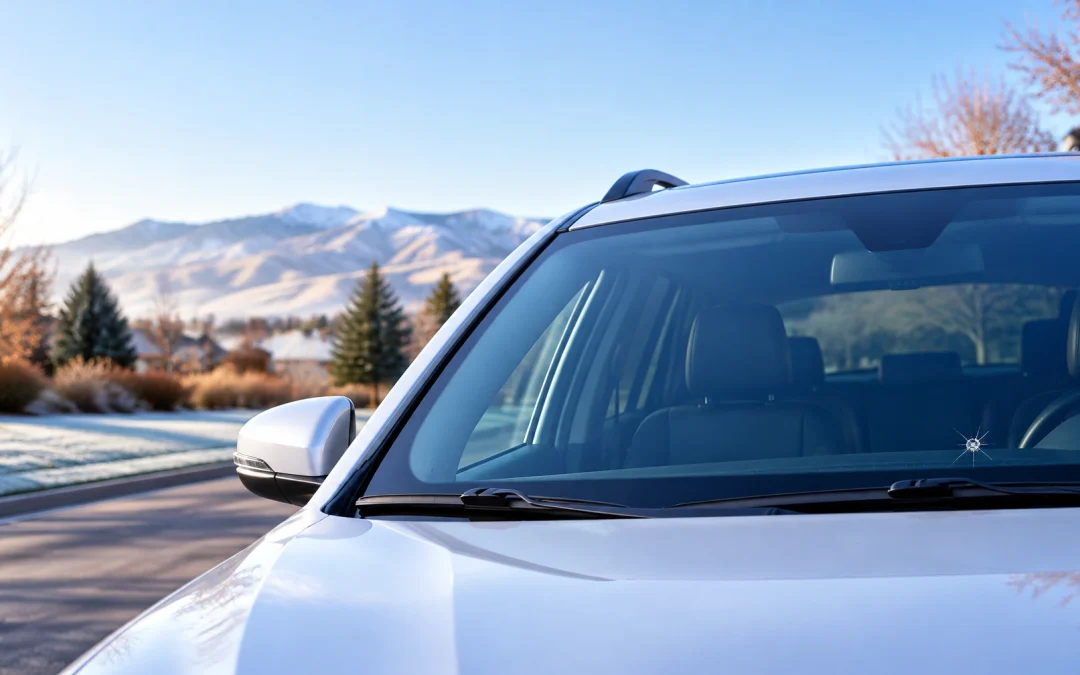
If your windshield has a small rock chip, repairing it before Boise’s first freeze can protect your visibility, preserve the original glass, and help you avoid the higher cost of a full replacement. Fall is the best time to deal with minor damage because cold mornings, temperature swings, road debris, and defroster use can quickly turn a repairable chip into a spreading crack.
That is especially important for drivers in Boise, Meridian, Nampa, Caldwell, Star, Eagle, Kuna, and throughout the Treasure Valley. A chip that looks harmless in September may become a much larger problem after a few freezing mornings.
Why does cold weather make a windshield chip spread?
Your windshield is made from laminated glass. It has two layers of glass with a flexible plastic layer between them. When a rock hits the windshield, it can damage one or both layers and create a small impact point with tiny fractures around it.
The damage may remain stable for a while. However, the glass expands and contracts as its temperature changes. During a Boise fall morning, your windshield may go from a cold overnight temperature to warm sunlight or heated air inside the vehicle within minutes.
That repeated movement places stress on the damaged area.
Moisture can make the problem worse. If rain, melted frost, or car-wash water enters the chip and freezes, the water expands inside the damaged area. That pressure can push the small fractures farther apart. The result may be a long crack by the time you leave for work.
This is why prompt rock chip repair in Boise is more than a cosmetic fix. It helps stop a small problem before winter conditions remove your repair options.
Can the defroster turn a chip into a crack?
Yes. Your defroster is useful and necessary in cold weather, but sudden heat can stress damaged glass.
When your windshield is very cold, blasting high heat directly onto it creates a rapid temperature difference. The inside surface warms quickly while the outside surface remains cold. Sound glass can usually handle normal temperature changes. A windshield with a chip or short crack is more vulnerable.
You do not need to avoid your defroster completely. Instead:
- Start with a low or moderate temperature.
- Let the glass warm gradually.
- Avoid directing maximum heat at one small area.
- Do not pour hot water over an iced windshield.
- Avoid sudden temperature changes whenever possible.
If you already have a chip, schedule repair before you need to use the defroster every morning. A professional technician can also account for moisture and temperature when completing the repair.

How do winter sand, salt, and road debris affect windshield damage?
Winter driving creates more opportunities for additional windshield damage. Sand, salt, gravel, and other materials may be present on the road or kicked up by vehicles ahead of you.
These materials can affect a chip in several ways:
- More impacts: Loose gravel and road debris can strike an already weakened area.
- Contamination: Dirt, salt, and road film can enter the damaged cavity and make a clean repair more difficult.
- Abrasive particles: Sand can scratch glass and may work into a chip or crack.
- Moisture exposure: Slush and melting ice can carry water into the damaged area.
- Vibration: Rough winter roads can place additional stress on existing cracks.
You can reduce your risk by increasing your following distance behind trucks, slowing down near construction zones, and avoiding loose shoulders when possible. Still, prevention cannot protect a chip that already exists. The most practical solution is to have the damage evaluated before winter road conditions arrive.
Is your chip still repairable?
A professional inspection is the best way to determine whether you need repair or replacement. As a general guide, a small chip may still be repairable when it:
- Is roughly smaller than a quarter.
- Has not developed into a long crack.
- Is away from the edge of the windshield.
- Is not directly in the driver’s primary line of sight.
- Has not damaged multiple areas of the glass.
- Has not penetrated deeply through the laminated layers.
A technician injects specialized resin into the damaged area. The resin fills the fractures and helps restore the windshield’s strength and appearance. The repair may leave a small mark, but it can prevent the damage from spreading and help you keep the factory windshield.
If you are unsure about the size, try comparing the damage with a quarter. You can also use a dollar bill as a simple way to estimate the length of a crack. This is not a professional diagnosis, but it can help you understand whether the damage is still minor or has expanded beyond a small chip.
For more information, see our guide on whether you should repair or replace your windshield.
When does a windshield need full replacement?
A full windshield replacement may be necessary when the damage is too extensive or affects an important safety area. Replacement is more likely when:
- The crack is long or continues to spread.
- The damage reaches the windshield edge or frame.
- The damage is in the driver’s direct line of sight.
- The windshield has multiple large chips or complex star breaks.
- The inner layer of laminated glass is damaged.
- The glass is shattered or severely weakened.
- The damage interferes with a camera or sensor mounted near the windshield.
A crack near the edge deserves special attention because the frame area experiences significant stress. Damage in the driver’s viewing area can also create glare or distortion, even after a repair.

If your vehicle has lane-departure warning, automatic emergency braking, adaptive cruise control, or another advanced driver assistance system, ask about calibration after replacement. These systems may use a camera mounted behind the windshield. A replacement can affect the camera’s position, so ADAS calibration may be necessary.
What should you do if you find a chip before a freeze?
Take a few simple steps while arranging service:
- Inspect the damage when parked safely. Look for radiating lines, edge cracks, or a crack that extends into your viewing area.
- Keep the area clean and dry. If the chip is dry, a small piece of clear tape can help keep out dirt and moisture until service. Do not seal in water or debris.
- Avoid sudden heat. Warm the windshield gradually instead of using maximum defroster heat immediately.
- Skip high-pressure washing. Avoid directing a pressure washer or strong car-wash spray at the damaged area.
- Schedule service quickly. A repairable chip can spread after one cold night, a rough drive, or a sudden temperature change.
Do not continue driving if a crack seriously obstructs your vision or the windshield appears unstable. Pull over safely and contact a professional for guidance.
Why choose mobile windshield repair in Boise?
You do not always have time to drive across town and wait at a glass shop. Windshield Repair Specialists offers mobile windshield repair in Boise and surrounding communities. Our technicians come to your home, workplace, or another convenient location while you continue with your day.
We provide both rock chip repair and full windshield replacement for cars, trucks, and SUVs. We use industry-leading materials and inspect the damage before recommending the appropriate solution.
We also work with insured and uninsured drivers. If you have comprehensive coverage, your policy may help pay for eligible glass damage, depending on your deductible and policy terms. If you are paying out of pocket, we offer competitive cash-pay pricing and price matching. Contact your insurance provider or ask us about your options before scheduling service.
We serve Boise, Meridian, Nampa, Caldwell, Star, Eagle, Kuna, and nearby Treasure Valley communities. Whether you need glass repair in Boise, Idaho or windshield replacement in Boise, Idaho, getting started before the first freeze can save you time, money, and stress.

Do not wait for the first freezing morning
A windshield chip rarely improves on its own. Cold air, freezing moisture, defroster heat, road vibration, and winter debris can all push the damage in the wrong direction.
If the chip is still small, early repair may preserve your windshield and cost less than replacement. If it has already spread, a prompt inspection can help you address the problem before visibility and vehicle safety become bigger concerns.
Contact Windshield Repair Specialists for a free estimate at your home or workplace. Call (208) 283-2447 to schedule Boise windshield repair or replacement before winter arrives.